Low-friction adoption
Interviewees resisted anything that added setup time or a new task. The solution had to fit into existing training and recovery routines.
Human-AI Design Portfolio / UC Berkeley
A low-friction wearable system that helps recreational athletes manage hamstring recovery, compare bilateral muscle activation, and regain confidence before returning to play
4 interviews
40 concepts
3 prototypes
Problem: unstructured recovery
Method: interviews, observation, AI synthesis
Output: sEMG wearable + app concept
Project Motivation
Recreational athletes often self-manage hamstring strains with advice from friends, internet searches, or habit. Clinical tools and elite-athlete protocols exist, but they assume coaching, medical supervision, or time that everyday users often do not have.
Interviewees resisted anything that added setup time or a new task. The solution had to fit into existing training and recovery routines.
Athletes described frustration, fear of reinjury, and uncertainty around when it was safe to return to normal activity.
Observations showed rushed, mostly static stretching before high-intensity play, revealing a gap between perceived readiness and evidence-based preparation.
Design Journey
AI was used as a partner for synthesis, semantic mapping, concept scoring, gap filling, and devil's advocate critique. The team kept final authority over feasibility, user fit, and emotional interpretation.
01
Four semi-structured interviews and field observations with recreational athletes established the core question: how do active people manage hamstring risk without professional oversight?
02
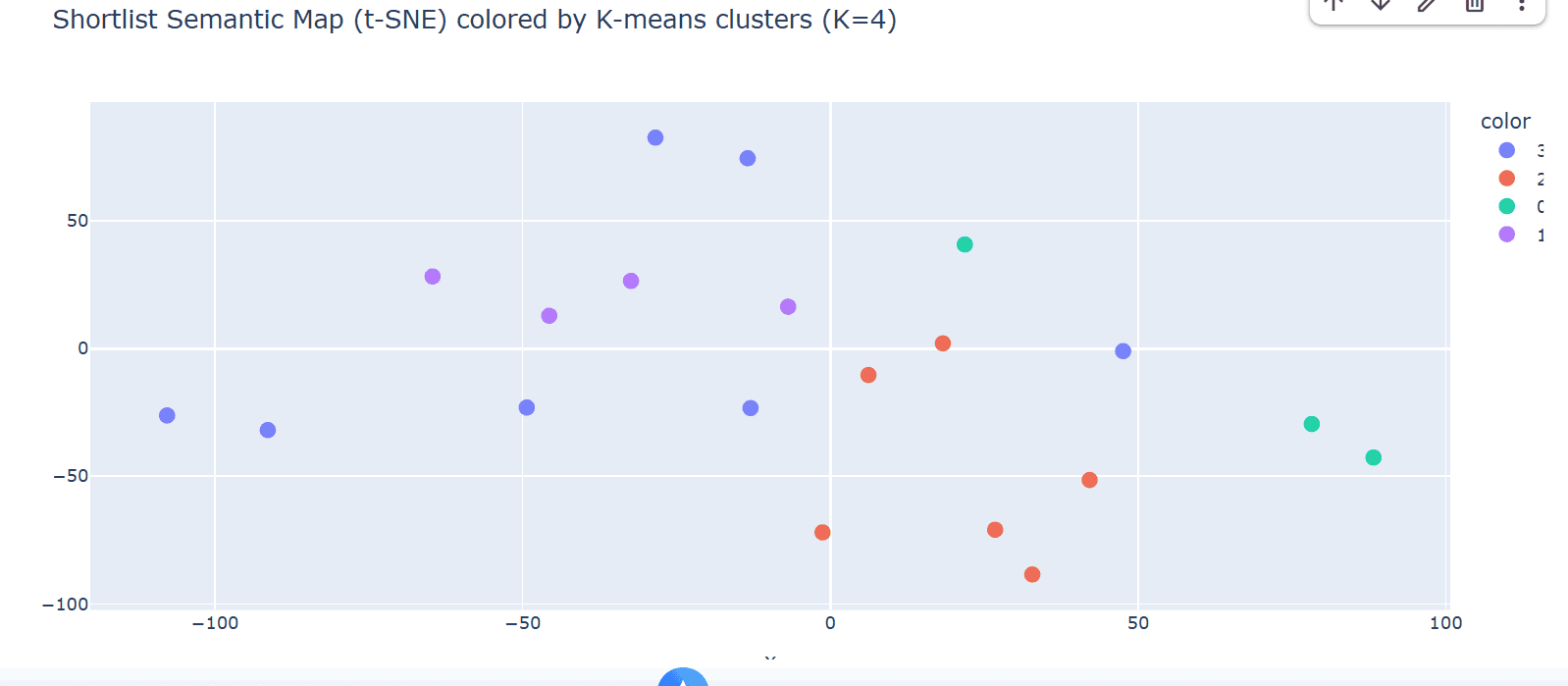
AI helped cluster transcripts, extract themes, and map concept similarities. Human interpretation kept the emotional nuance: confidence, convenience, and trust mattered as much as sensing.
03
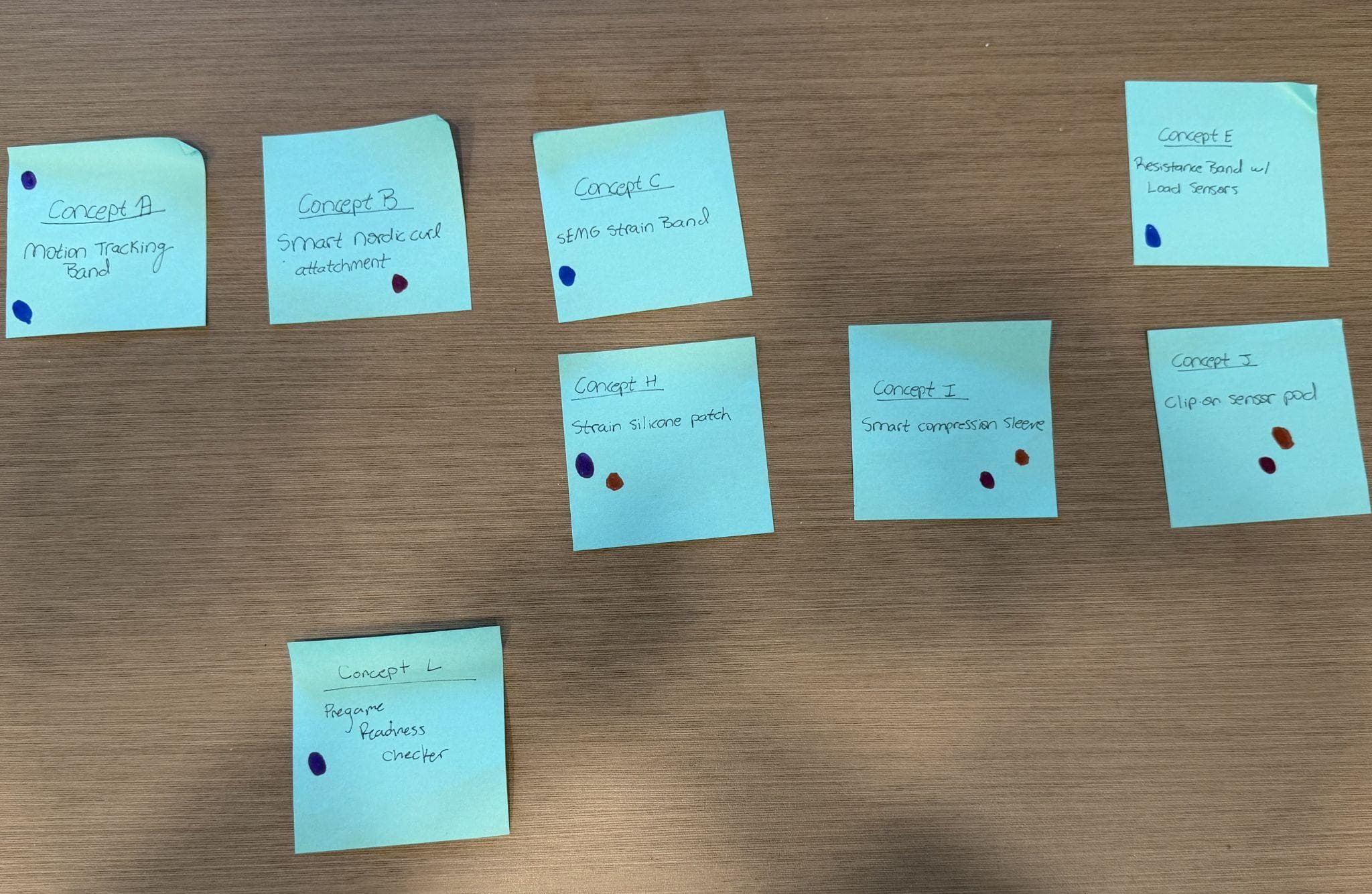
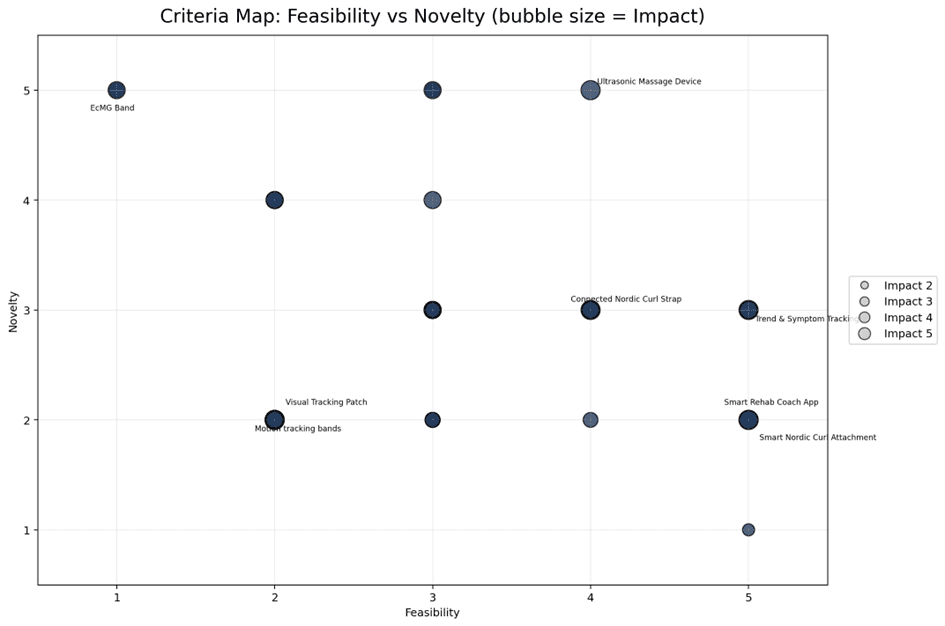
The team generated roughly forty concepts, then used semantic maps, feasibility/novelty scoring, and gap-filling prompts to expose over-focus on hardware and under-focus on decision support.
04
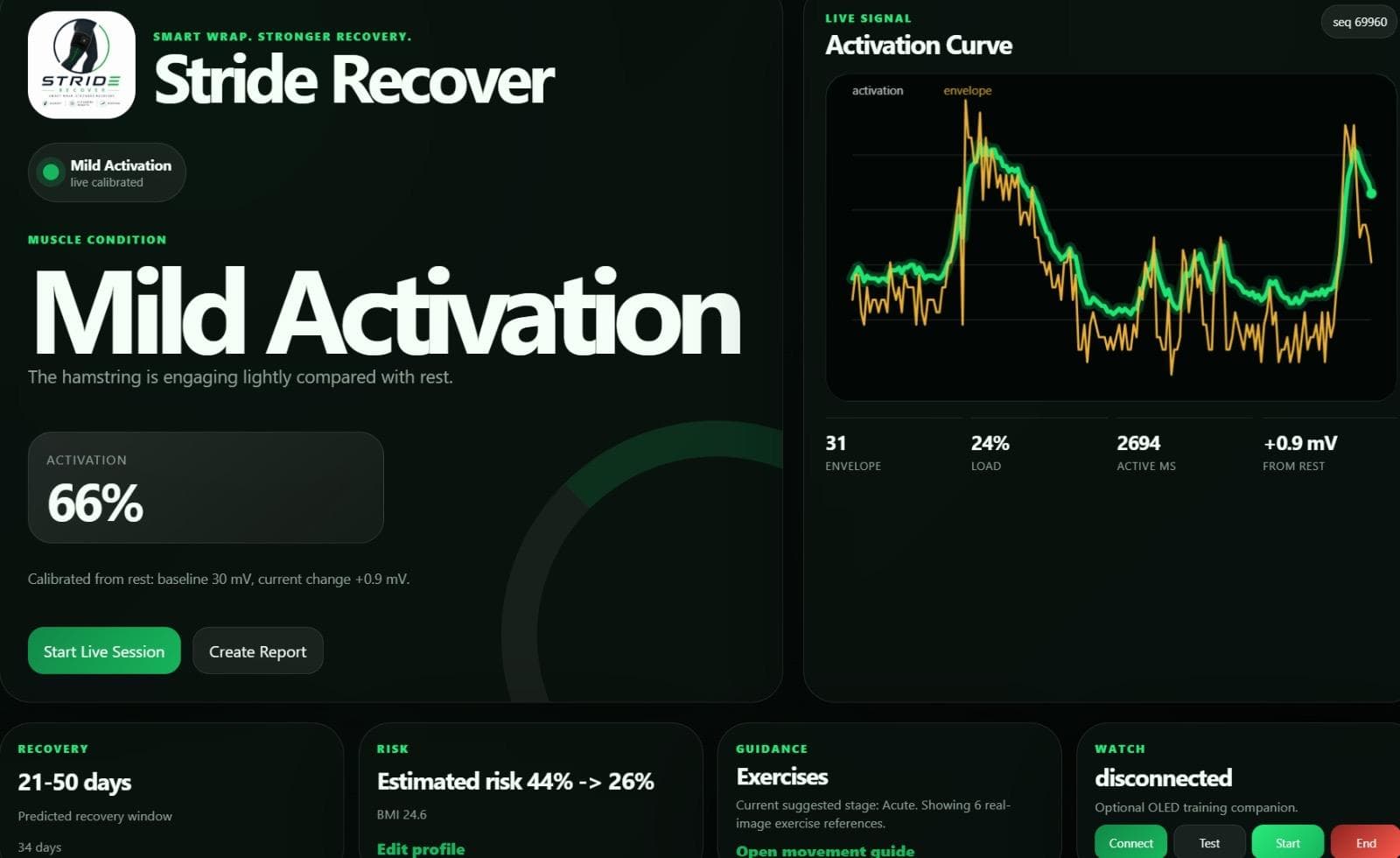
The final direction became Stride Recover: a familiar wearable with sEMG sensing, bilateral comparison, simple risk states, and recovery exercises surfaced through a companion interface.
Final Prototype
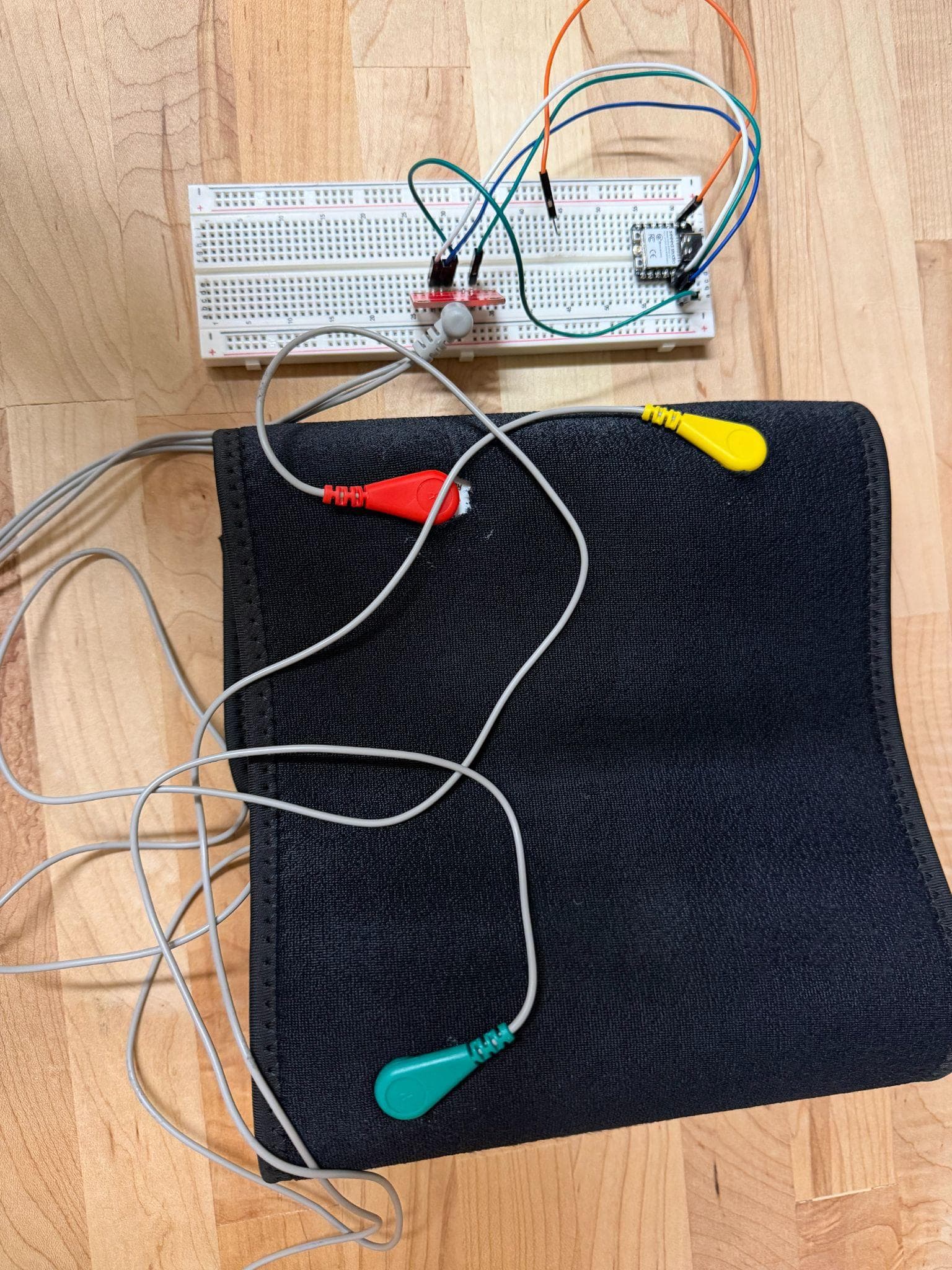
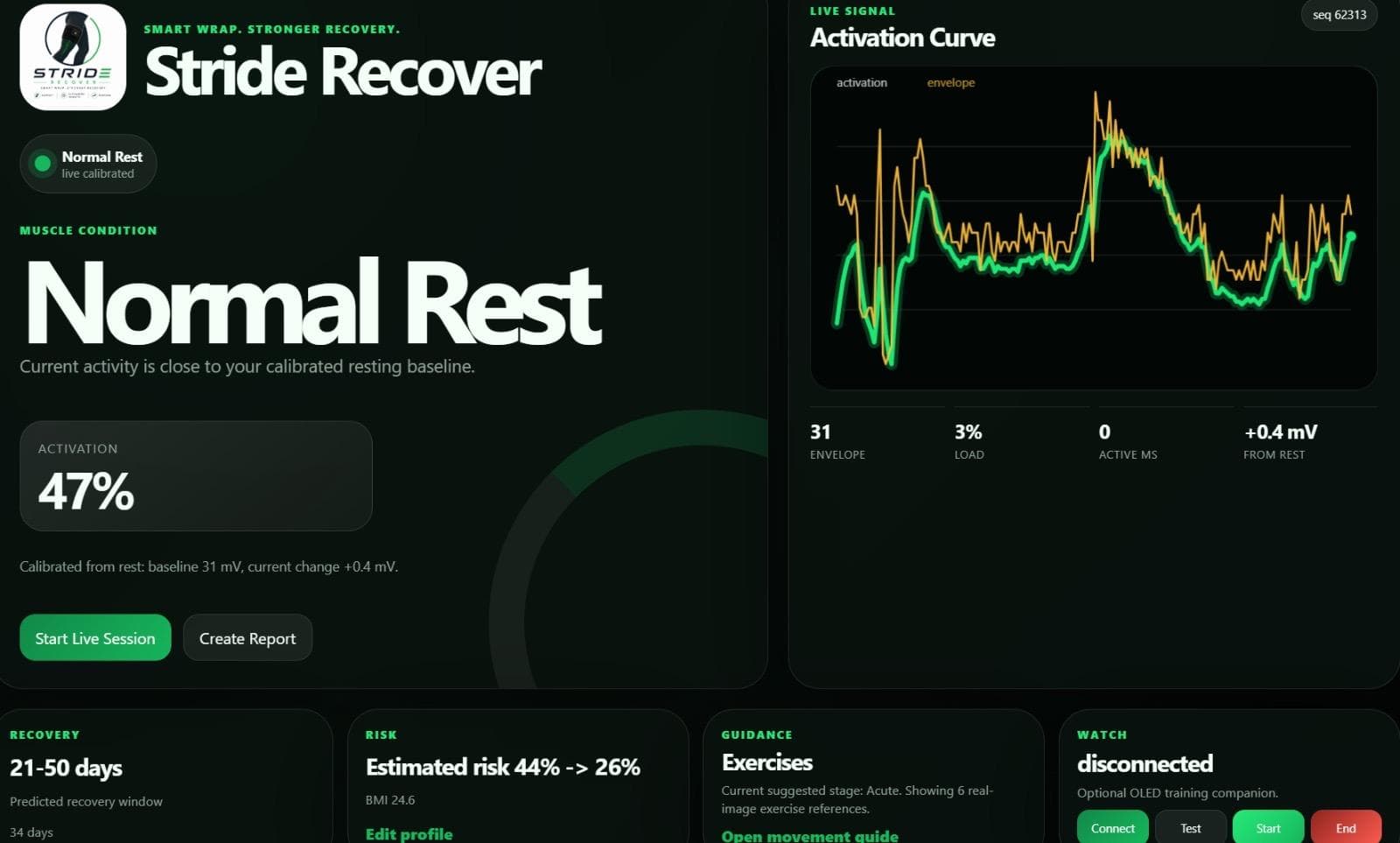
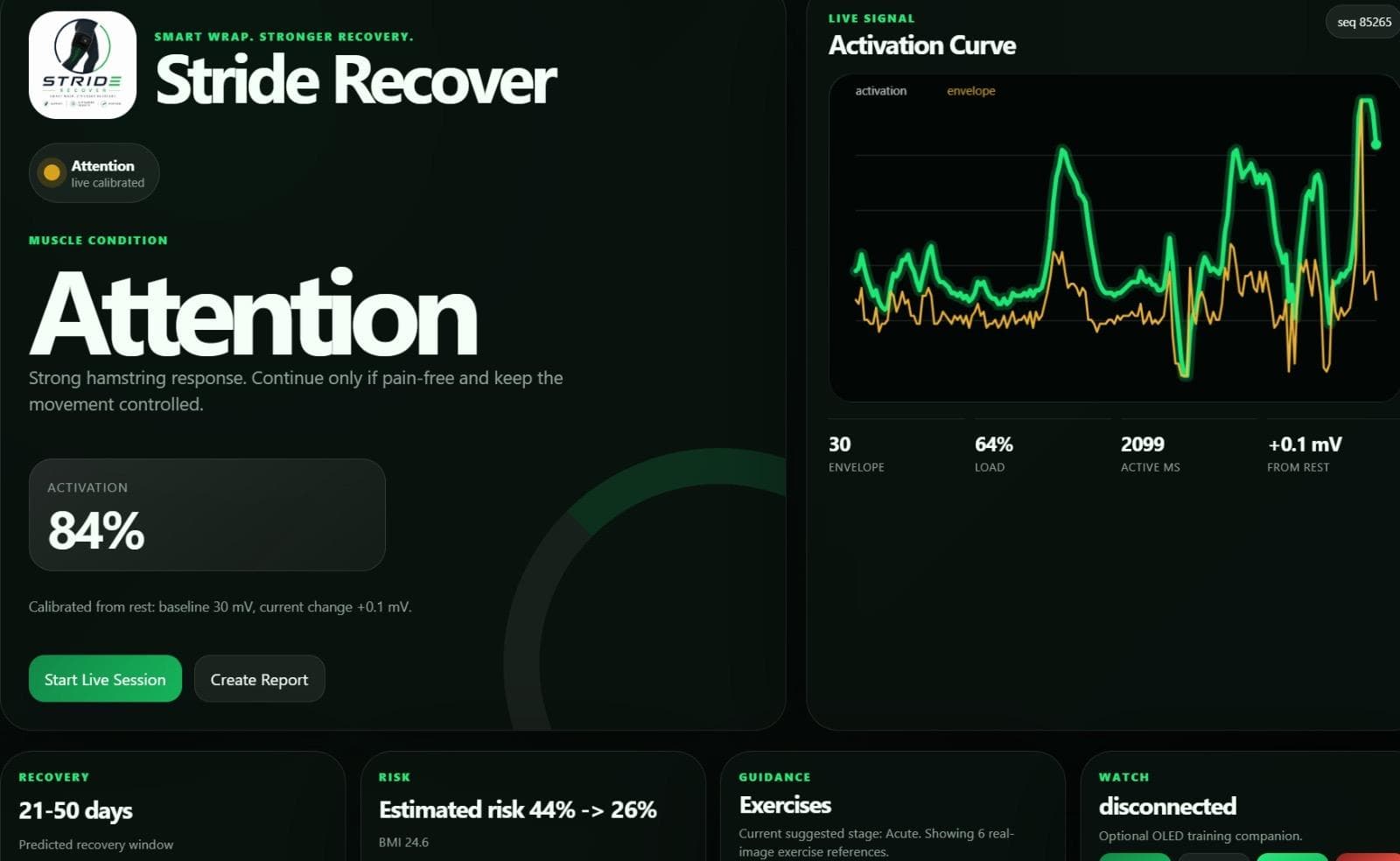
The prototype combined a thigh-worn textile form, sensing hardware, visual status feedback, and a dashboard language built around three simple activation states: normal rest, attention, and danger.
Confidence
Security
Ease of use
Comfort
Reliability
Routine integration
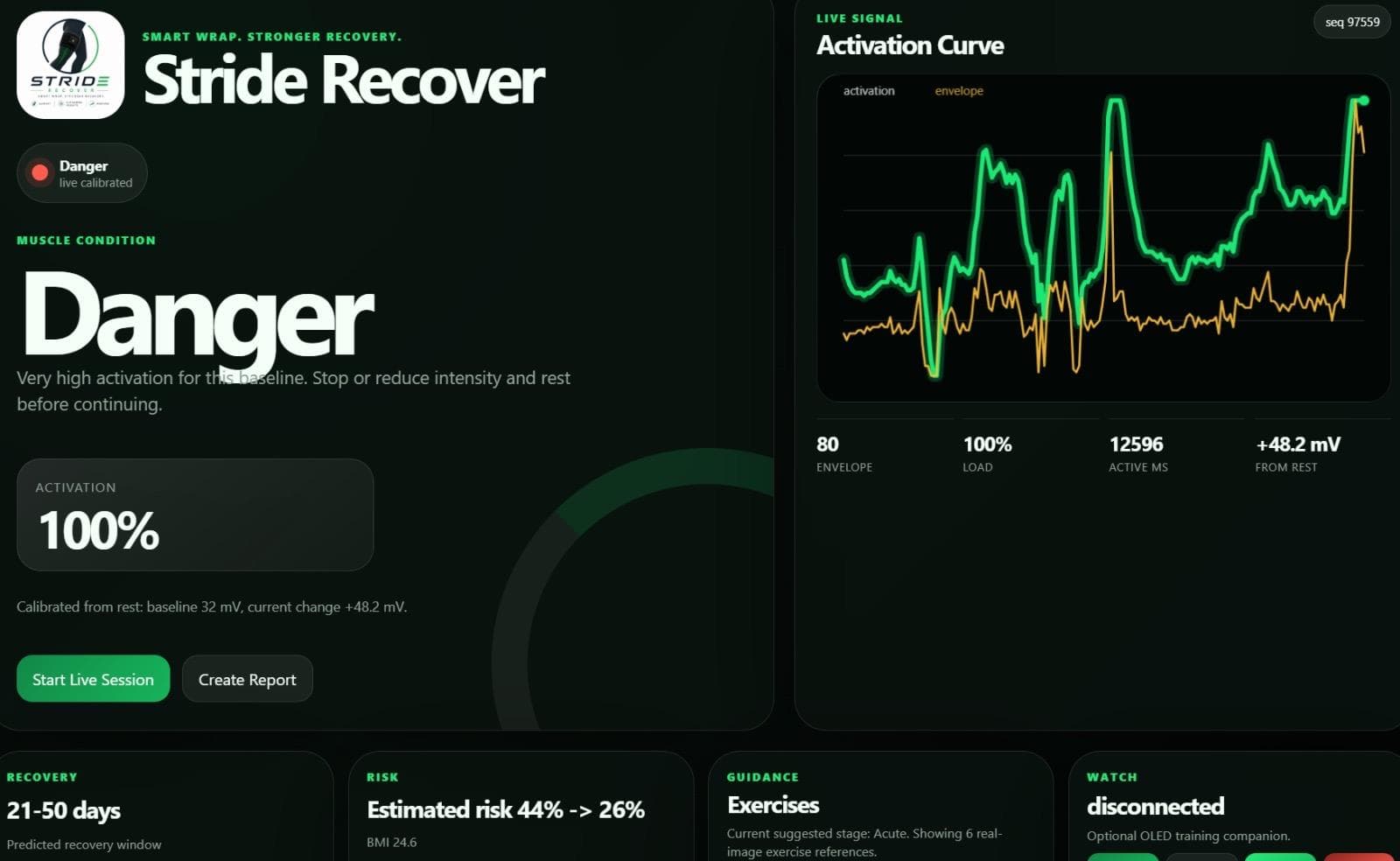
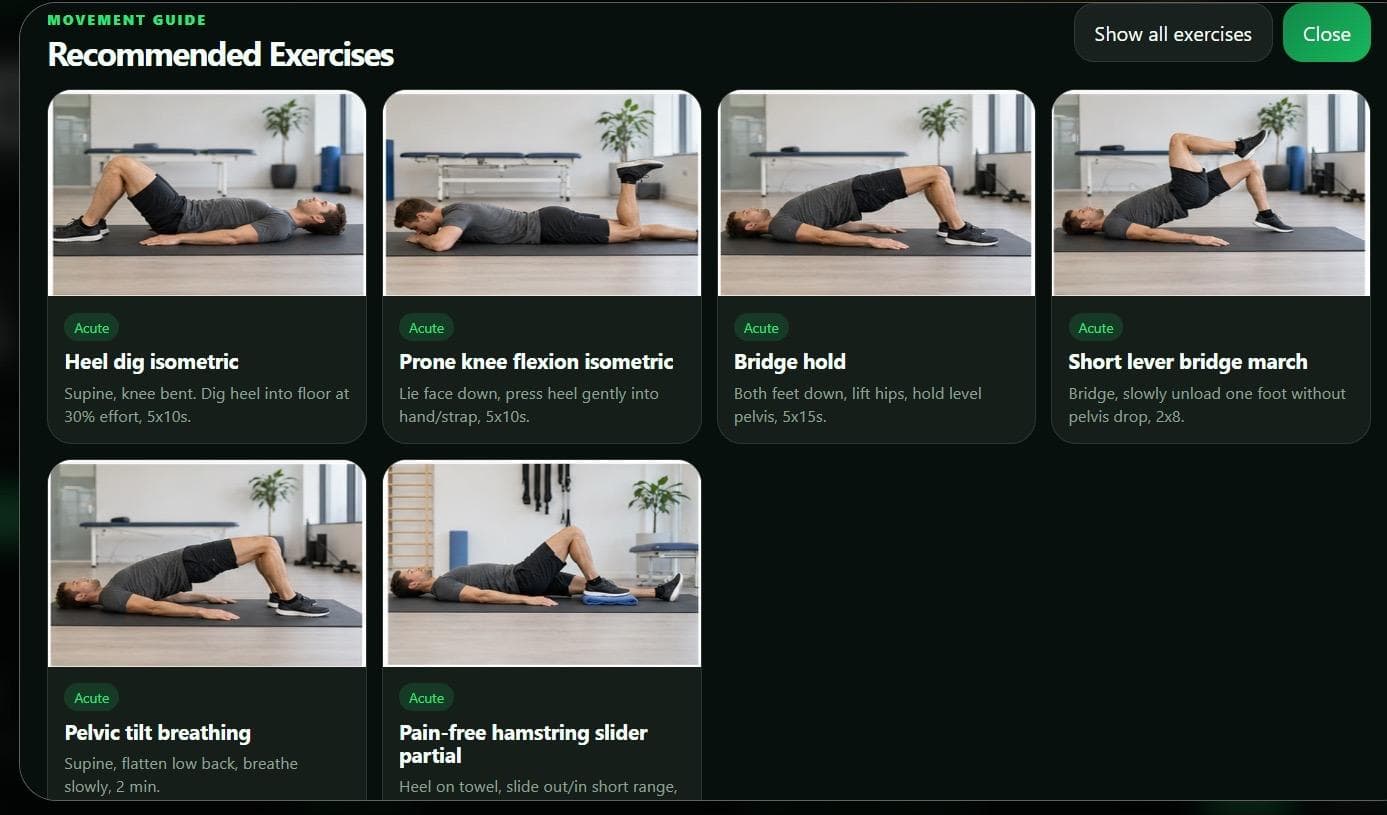
Demonstration
The final portfolio includes physical artifacts, electronics, app/dashboard mockups, and video demonstrations. This gives the project a complete arc from research insight to tangible prototype behavior.
Systems Thinking
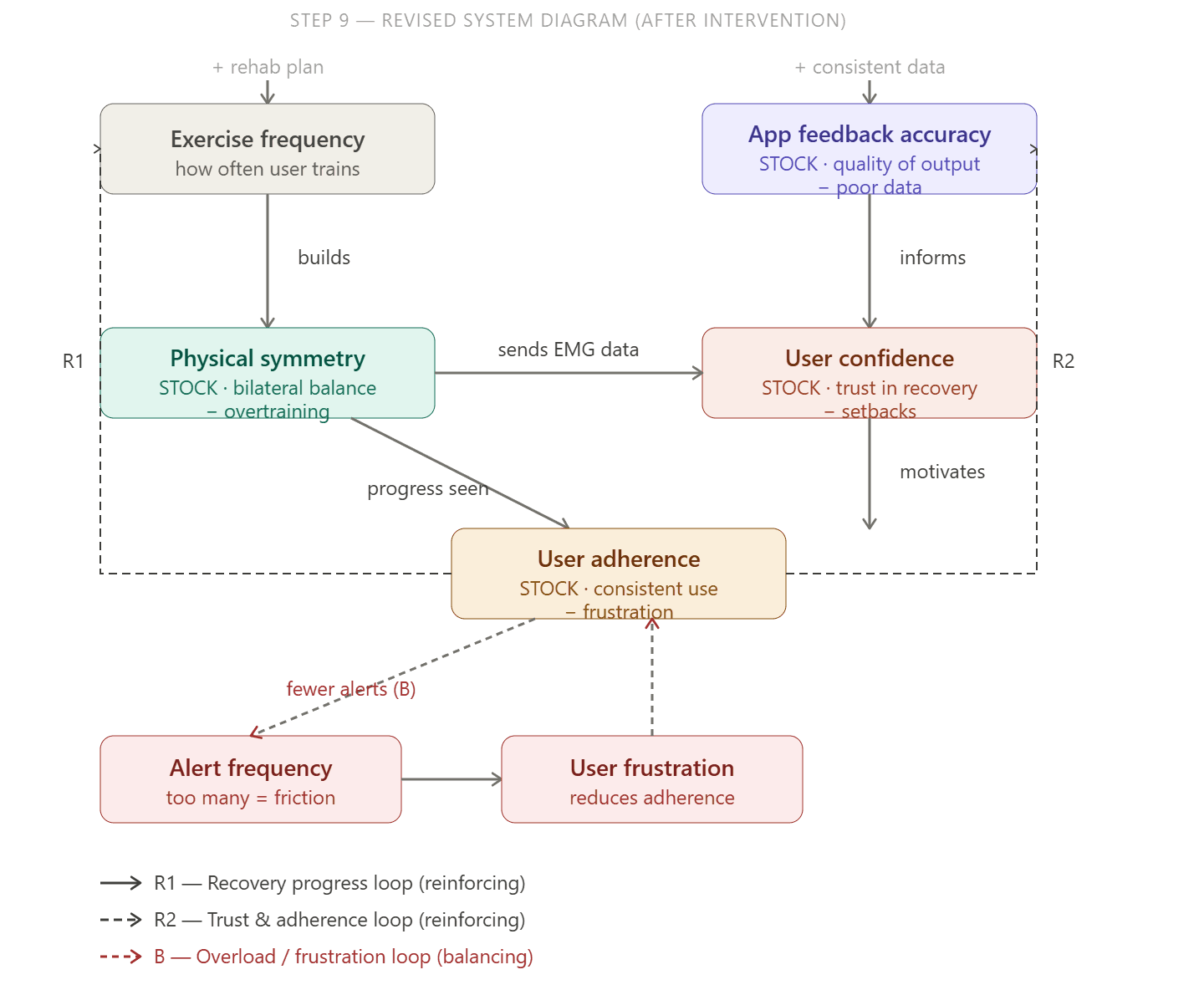
The system model connected physical recovery, user confidence, adherence, feedback accuracy, and alert fatigue. A good wearable cannot simply collect signals; it must help users trust the right action at the right moment.
Reflection
Early ideas clustered around sensing hardware. The strongest shift was realizing that users did not only need detection; they needed confidence, clear interpretation, and a product that did not punish them with extra work.
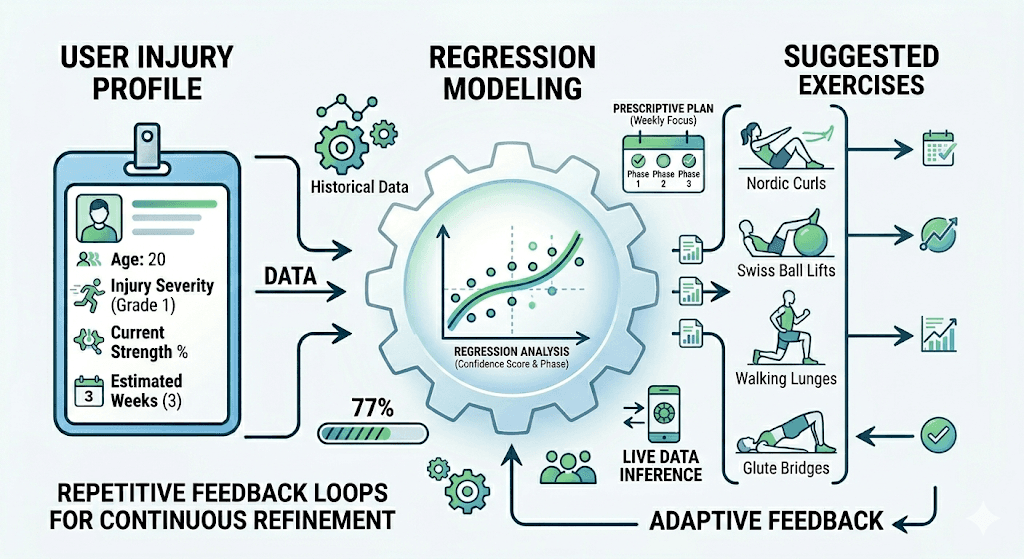
AI was valuable for speed and structure, especially in mapping a large concept space and exposing missing areas. It was weaker at judging everyday practicality. Concepts that sounded advanced still had to be filtered through user routines, comfort, setup effort, and trust.
Human judgment remained essential: selecting what mattered, rejecting overcomplicated ideas, merging overlapping concepts, and grounding the final prototype in observed behavior rather than technical novelty alone.
Bibliography
Ripley, N. J., Cuthbert, M., Ross, S., Comfort, P., & McMahon, J. J. (2021). The Effect of Exercise Compliance on Risk Reduction for Hamstring Strain Injury: A Systematic Review and Meta-Analyses. International Journal of Environmental Research and Public Health, 18(21), 11260.
Markvicka, E., Wang, G., Lee, Y.-C., Laput, G., Majidi, C., & Yao, L. (2018-2019). ElectroDermis: Fully untethered, stretchable, and highly-customizable electronic bandages.